John Deere: Forged by Innovation, Driven by the Future
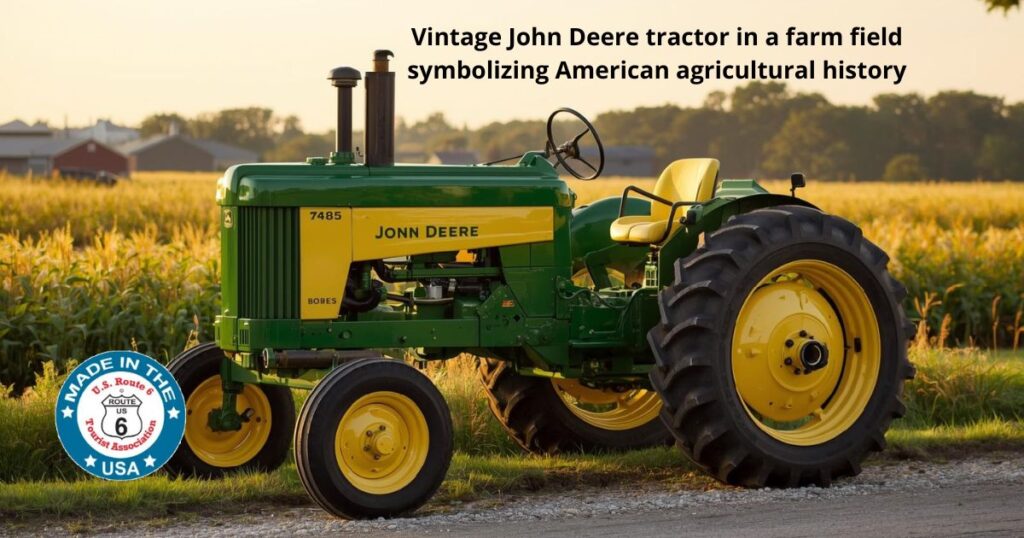
When travelers follow historic corridors like US Route 6, they are not just moving through landscapes. They are tracing the story of American ingenuity. Few names embody that story as powerfully as John Deere. Founded in 1837, the company has grown from a single blacksmith shop into one of the most influential forces in agricultural history, shaping how food is grown, land is cared for, and rural communities thrive.
For tourists and history enthusiasts alike, John Deere represents more than machinery. It represents resilience, practical problem solving, and a forward looking spirit that continues to define American agriculture.
A Blacksmith’s Breakthrough in 1837
The John Deere story begins in Grand Detour, Illinois, where a Vermont born blacksmith identified a problem that plagued Midwestern farmers. The sticky prairie soil clung to traditional cast iron plows, slowing work and exhausting farmers. Deere’s solution was elegantly simple yet revolutionary. He fashioned a plow from polished steel that could scour itself as it moved through the soil.
This single innovation transformed farming on the American frontier. Fields that once required repeated stops to clean equipment could now be worked efficiently. Crops expanded, settlements grew, and a young nation gained momentum. That first steel plow remains a pivotal moment in agricultural history and a powerful example of how observation and craftsmanship can change the course of an industry.
Building a Legacy of Trust and Quality
Throughout the nineteenth and twentieth centuries, John Deere continued to build on its founding principle. Listen to the farmer. Solve real problems. From horse drawn equipment to mechanized tractors, the company evolved alongside American agriculture.
By the early 1900s, the iconic green and yellow machines were becoming a familiar sight across rural America. During challenging periods such as the Great Depression and wartime production shifts, John Deere maintained a reputation for durability and reliability. Farmers depended on equipment that could withstand long hours, harsh conditions, and changing demands. That trust became one of the company’s most valuable assets.
Major Innovations That Shaped Modern Farming
Innovation has always been central to John Deere’s identity. Some of the most influential advances include:
- The development of reliable gasoline powered tractors that replaced animal labor and increased farm productivity
- Precision agriculture technologies that use GPS guidance, sensors, and data analytics to reduce waste and improve yields
- Advanced harvesting equipment that allows farmers to bring in crops faster while preserving quality
- Smart machinery integration that enables real time monitoring of soil conditions, equipment performance, and fuel efficiency
These innovations did more than improve efficiency. They helped redefine farming as a science driven profession, blending tradition with technology.
Commitment to Sustainability and Future Growth
Today, John Deere stands at the intersection of heritage and innovation. The company’s focus on sustainability reflects a deep understanding of agriculture’s future. Reducing environmental impact while increasing productivity is no longer optional. It is essential.
John Deere continues to invest in electric and autonomous equipment, precision application systems, and software platforms that empower farmers to make informed decisions. These efforts support soil health, water conservation, and long term land stewardship, values that resonate strongly with travelers who appreciate both history and responsible progress.
John Deere and the Broader American Story
For visitors exploring agricultural museums, rural towns, and historic routes across the country, John Deere’s influence is often woven into the landscape. From restored tractors at county fairs to factory heritage exhibits and community initiatives, the brand serves as a tangible link between past and present.
Many John Deere dealerships and heritage sites welcome visitors, offering a closer look at historic equipment and the evolution of farming technology. These experiences provide context for how innovation on the farm helped fuel economic growth, feed expanding populations, and shape regional identities.
Looking Ahead While Honoring the Past
As John Deere approaches two centuries of innovation, its mission remains clear. Build equipment that works smarter, lasts longer, and supports the people who feed the world. Upcoming initiatives in automation, renewable energy integration, and digital agriculture point toward a future where efficiency and sustainability go hand in hand.
For the US Route 6 Tourist Association audience, John Deere stands as a reminder that American progress has always depended on practical innovation rooted in real needs. From a polished steel plow in 1837 to intelligent machines guiding today’s harvests, the company’s journey mirrors the broader story of American agriculture.
Exploring that legacy offers travelers a deeper appreciation for the fields, towns, and traditions that line historic highways. John Deere is not just a brand. It is a living chapter in the ongoing story of resilience, innovation, and growth that continues to define rural America.
This iconic attraction has recently undergone a complete overhaul and now provides a brand-new experience for visitors. The Pavilion showcases both new and vintage equipment, interactive exhibits, and immersive experiences, making it a must-visit for anyone interested in the history and innovations of John Deere.
The Pavilion, which opened in 1997, is part of an urban renewal project and has become a top tourist attraction in the Quad Cities area. It’s open year-round, offering hands-on fun for everyone, regardless of age or interest in machinery. You can climb on equipment both gargantuan and garden-sized, making every day prime weather for exploring.
The Pavilion is located at 1400 River Dr, Moline, IL 61265. For more pavilion information, you can visit their website https://www.deere.com/en/connect-with-john-deere/visit-john-deere/pavilion/. Also checkout Steam On Wheels