Fort Morgan Frontier Post: A Gateway on the Great Plains
Travelers crossing northeastern Colorado today may notice Fort Morgan as a welcoming stop along US Route 6 and Interstate 76. Yet long before highways and modern vehicles, this landscape was an important crossroads of migration, survival, and settlement on the American frontier. The story of the Fort Morgan Frontier Post reflects a pivotal era when military outposts, wagon trails, and determined settlers shaped the future of the Great Plains.
A Frontier Outpost Born in a Time of Change
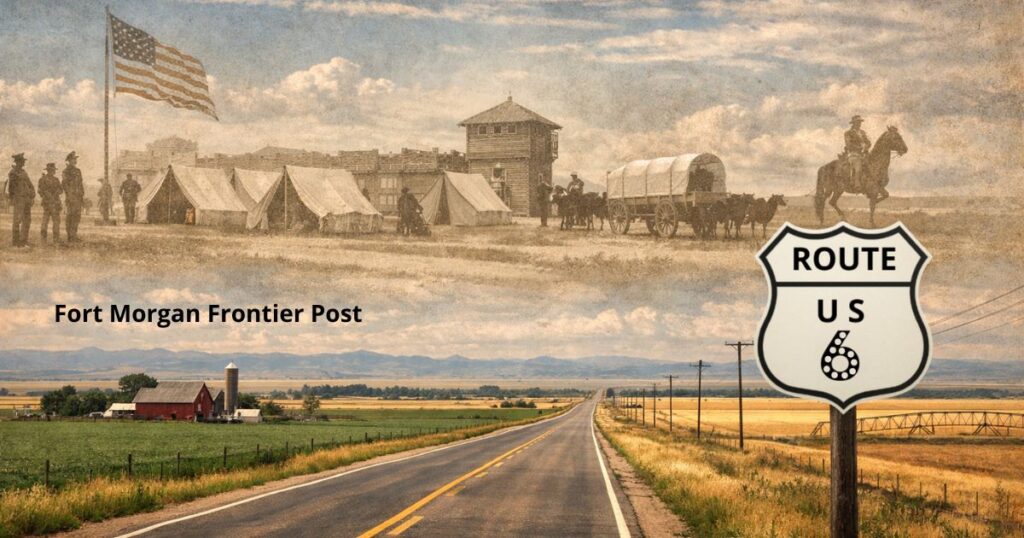
Fort Morgan’s origins reach back to 1865, when a frontier military post was established to help protect settlers and travelers moving westward across the plains. During this period, migration routes across Colorado carried wagon trains, stagecoaches, and freight caravans heading toward mining camps and growing western communities.
The region around present day Fort Morgan was strategically important. The Overland Trail, one of the primary routes linking the Missouri River with the Rocky Mountain region and beyond, passed nearby. As westward migration accelerated, the need for protection became increasingly urgent. The military established the Fort Morgan post, operating from 1864 through 1868, to safeguard these routes and maintain stability in a rapidly changing frontier landscape.
Although the original fort no longer stands and no physical remnants remain today, its location is remembered near the Main Street exit along Interstate 76 and US Route 6. This quiet stretch of highway once represented a lifeline for pioneers navigating the vast plains.
Protecting the Early Travelers
In the mid nineteenth century, the plains of eastern Colorado were a demanding and often dangerous environment. Travelers faced unpredictable weather, long distances between settlements, and potential conflict as migration routes crossed Indigenous lands.
The Fort Morgan military post played a vital role in maintaining order and offering protection. Soldiers stationed at the fort monitored nearby trails, escorted wagon trains when necessary, and provided a reassuring presence for settlers building new lives in the West.
Their mission helped support the safe passage of:
- Wagon trains heading toward mining regions in Colorado
- Stagecoach lines traveling the Overland Trail
- Supply wagons delivering goods to frontier towns
- Homesteaders moving west in search of land and opportunity
While the fort’s operational years were relatively short, its influence helped stabilize the region during a critical moment in western expansion.
From Frontier Post to Growing Community
After the military post closed in 1868, settlement in the area continued to grow. The surrounding plains proved fertile for agriculture, and Fort Morgan gradually evolved into an important farming and ranching center.
Railroads and transportation routes strengthened the city’s role as a regional hub. Farmers relied on the town for grain shipping, equipment, and trade, while travelers moving between Denver and northeastern Colorado found Fort Morgan a natural stopping point.
Over time, this developing transportation corridor would become part of a major national highway.
US Route 6 and the Modern Travel Corridor
Today, US Route 6 runs directly through Fort Morgan, linking the city to a remarkable transcontinental highway that stretches from Provincetown, Massachusetts, to Long Beach, California. The highway follows the historic patterns of travel that once carried pioneers, stagecoaches, and early freight wagons across the continent.
In this section of Colorado, US Route 6 shares the roadway with Interstate 76, creating a combined route that passes through Fort Morgan and continues toward Denver and the eastern plains. The Main Street exit from I-76 and US Route 6 offers easy access to the town’s historic center.
For travelers exploring the heritage of the American highway system, Fort Morgan represents a fascinating intersection where frontier trails, agricultural development, and modern highways meet.
Echoes of the Overland Trail
Though the original fort structures have disappeared, the story of Fort Morgan remains closely tied to the Overland Trail, which once carried thousands of migrants across the plains.
The landscape around the city still reflects the vast openness experienced by early travelers. Wide skies, agricultural fields, and distant horizons hint at the challenges and opportunities that shaped life on the frontier.
For visitors interested in western history, Fort Morgan provides a meaningful connection to this era. Local museums, historic markers, and regional heritage sites help tell the story of the military post and the communities that followed.
A Stop Worth Discovering
Fort Morgan may appear at first glance to be a quiet agricultural town, but its history reveals an important chapter in the story of the American West. From a frontier military post guarding migration routes to a modern community along US Route 6, the city embodies the spirit of perseverance that defined the Great Plains.
Travelers following US Route 6 across Colorado will find Fort Morgan a rewarding place to pause, reflect, and explore. Even though the original fort has faded into history, its legacy continues to shape the town and the surrounding landscape.
The next time your journey along US Route 6 brings you across the plains of northeastern Colorado, consider taking the Main Street exit in Fort Morgan. Beneath the modern highway lies a frontier story that helped guide settlers, protect travelers, and open the path westward across the American plains.
Subscribe today and let Route 6 come to you, one story at a time.