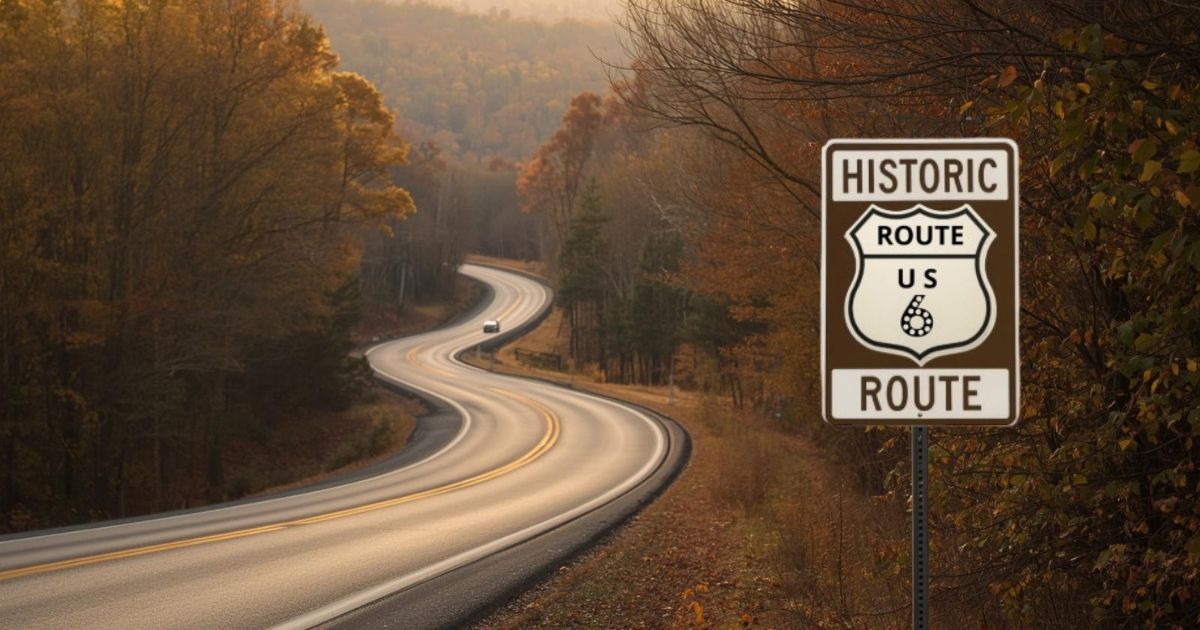
Where US Route 6 Meets Maritime History
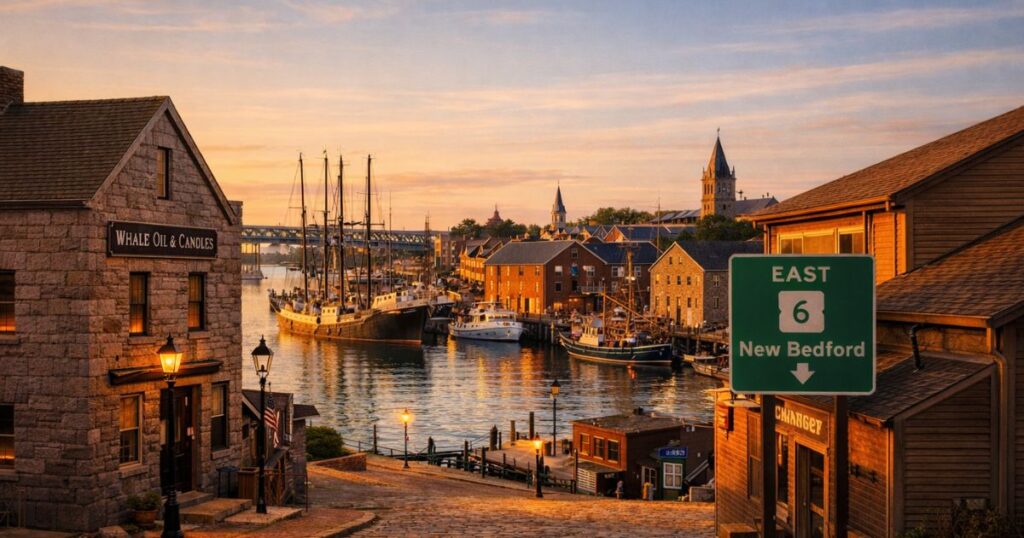
Exploring the Edges of New Bedford Whaling National Historical Park
Along the eastern stretch of US Route 6 in Massachusetts, travelers enter one of the most historically rich maritime landscapes in America. As the highway approaches the city of New Bedford, several ramps and nearby streets fall within or directly border the official boundaries of New Bedford Whaling National Historical Park. What may first appear to be a simple urban highway connection is actually an entry point into a district that once stood at the center of the global whaling industry.
For travelers following US Route 6 across the country from Provincetown, Massachusetts to Long Beach, California, this segment offers a powerful reminder that the highway passes through communities where American history is deeply woven into the landscape.
A Gateway to America’s Whaling Capital
During the 19th century, New Bedford was known as the whaling capital of the world. Ships departing from its harbor traveled thousands of miles in search of whale oil, which at the time was one of the most valuable commodities in global trade. Whale oil illuminated homes and streets across America and Europe before the rise of petroleum.
The historic district preserved within New Bedford Whaling National Historical Park protects many of the structures that supported this industry. Granite warehouses, cobblestone streets, maritime offices, and sailors’ chapels still stand today.
US Route 6 passes just north of this district as it moves through the city toward the harbor area. Several ramps and connecting streets provide access to the waterfront and the historic downtown blocks that now form the park’s core.
Travelers exiting the highway are only minutes away from stepping into a living maritime museum.
The Route 6 Corridor Near the Park
In this region, US Route 6 transitions from a cross country highway into a corridor connecting coastal communities across southeastern Massachusetts. As it passes through New Bedford, the road provides access to the historic waterfront and the preserved district that tells the story of America’s whaling era.
Nearby access points connect travelers to streets leading into the park district, including areas around:
- North Front Street
- Purchase Street
- Union Street
- Johnny Cake Hill
These streets guide visitors into a compact but remarkably rich historic landscape. Granite buildings from the 1800s line the streets, many of them constructed with the wealth generated by the whaling trade.
Standing here, it is easy to imagine the harbor once filled with whaling ships preparing for multi year voyages.
Key Places to Explore Inside the Park
Visitors arriving from US Route 6 can quickly immerse themselves in the stories preserved inside the park.
New Bedford Whaling Museum
The centerpiece attraction of the district, this museum houses one of the world’s most comprehensive collections related to the whaling industry. Massive whale skeletons hang overhead while exhibits explore maritime history, global trade, and the lives of sailors.
Seamen’s Bethel
This historic chapel was made famous by Herman Melville in Moby Dick. Sailors once gathered here before departing on long voyages, listening to sermons meant to prepare them for the dangers of the sea.
Historic Waterfront
Just a short walk from the park district lies the working harbor of New Bedford, still one of the busiest commercial fishing ports in the United States. The contrast between historic whaling docks and modern fishing vessels highlights the city’s continuing maritime tradition.
Cultural Heritage Beyond Whaling
While whaling shaped the early identity of New Bedford, the city’s story is much broader.
The area became an important center for abolitionist activity in the 1800s, and the historic district preserves sites connected to the Underground Railroad. Frederick Douglass spent time in New Bedford after escaping slavery, finding work along the waterfront and becoming involved in the abolitionist movement.
Today the surrounding neighborhoods reflect a vibrant mix of cultures, particularly strong Portuguese and Cape Verdean communities whose maritime traditions continue to influence the city.
Visitors traveling along US Route 6 will find restaurants, bakeries, and cafes that celebrate these global connections.
Natural Beauty Along the Coast
Although the historic district is compact, the surrounding region offers impressive coastal scenery.
Just a short drive from the Route 6 corridor, visitors can explore:
- Fort Taber Park, overlooking Buzzards Bay with sweeping harbor views
- New Bedford Harbor Walk, a scenic waterfront path
- Clarks Cove, a peaceful shoreline area popular for sunsets
These coastal landscapes help explain why New Bedford became such a powerful maritime hub in the first place.
Why This Stop Matters Along US Route 6
For travelers following US Route 6 across the country, the stretch through New Bedford offers something special. It connects a modern highway with one of the most significant maritime heritage districts in the United States.
Here, the story of a global industry unfolds within a few walkable blocks. Granite warehouses, sailors’ chapels, harbor docks, and museums tell the story of a time when ships leaving this port helped fuel the economies of nations.
It is a powerful reminder that historic highways often pass through places where the past is still visible in the streets, buildings, and waterfronts.
A Worthwhile Detour
If your journey takes you along US Route 6 in Massachusetts, consider taking one of the nearby ramps into downtown New Bedford. Within minutes you can stand among cobblestone streets where sailors once prepared for voyages across the world’s oceans.
The experience offers more than history. It reveals how communities along this historic highway helped shape the economic and cultural story of the United States.
From the harbor winds to the preserved granite buildings, New Bedford Whaling National Historical Park invites travelers to step off the highway and into one of America’s most fascinating maritime landscapes.
For anyone exploring the full corridor of US Route 6, this coastal gateway provides a memorable beginning or ending to the journey across fourteen states.
Subscribe today and let Route 6 come to you, one story at a time.